





 What
does “transparency” in business actually mean? A lot of material has been
written on that topic over the last few years in relation to social media
marketing. Most of articles deal with
transparency at the corporate branding level although some authors provide
commentary around personal branding. I’ll
admit that a few of my own blog posts touch on transparency; yes, in many cases
authenticity, relevance and trust are also mentioned. One business dictionary defines
transparency as a “lack of hidden agendas or conditions, accompanied by the availability
of full information required for collaboration, cooperation, and collective
decision making.” If we go with that
definition, what might a transparent exchange sound like? 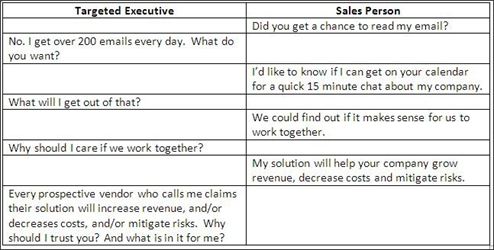 Of course transparency
doesn’t imply being rude or cutting people short. In the example above both individuals are showing
a type of transparency. The executive is
asking very direct “what and why” questions.
Yes, the example may feel a bit abrupt, but according to G. Richard
Shell’s bookBargaining
for Advantage “you often get
more by finding out what the other person wants than you do by clever arguments
supporting what you need.” On the other
hand, the sales rep is not making any attempt to find out what motivates or might
inspire the executive to move forward with a meeting. He is circling around what would be a good
outcome for him. Information about what people
want is power. Are you using
transparency to gather information? Or
does your transparency represent a threat to your prospects because it’s
obvious you are only considering your own needs and perceptions? |
 |
|||||

|
 


CategoriesCMOConsumer Privacy Content Marketing Customer Experience Human Resources Leadership Learning Marketing Resource Management Personal Branding Public Relations Sales Process SEO Social Media Social Media Marketing Social Networking Social Selling Strategy Teamwork Word of Mouth Marketing |
||||
    |
|||||
