





 It was the best of times, it was the worst
of times, it was the age of wisdom, it was the age of foolishness... it was the
era of brands buying Likes and Followers, it was the era of executives pushing
the same old content, it was the period of social media spray and pray
marketing. I’m sure you recognized the reference to Dickens’ “A Tale of Two
Cities.” It’s fitting because you can often see a duality
when you compare the way organizations use social media channels. Many use
social communication the same way they use traditional media. They’ve resisted
the social relationship revolution and have let yesterday’s marketing rules
resurrect inside the new platforms. They continue to broadcast tired old
content. They spray and pray for results.
And then turmoil erupts because many in the social audience want to
overthrow the brand aristocrats. Take them to the guillotine … off with their
heads! OK, it’s not that dramatic; but
you get the picture. Adjustments should be considered for social media. Here
are three areas to examine: I) Follow
back your targeted audience. 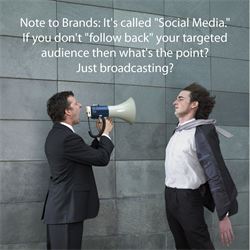 Most major brands don’t take the time to follow back their audience. In
fact, in the example below, you can see that
the average NFL team only follows back 0.40% of their fans. I’m sure they have their reasons for not following back. It could be a
time or budget issue. Or perhaps they feel it would damage their elite brand
status. Yes, that must be it. Major brands don’t have the time or money to spend
managing that aspect of engagement on social media. And even if they did they’d
probably feel funny acknowledging their audience with a follow back. Of course we know they are missing an easy opportunity to influence the
customer experience. After all, how would you “feel” if your favorite brand actually
followed you back?  II) Turn
off the automation and fake personalization. Yes, social media automation promises to improve your marketing efficiency.
But just because it’s efficient doesn’t mean it’s effective. In fact, some forms of automation throw key
social media tenets to the wind. Take for example transparency and authenticity.
Does an automated direct message that thanks me for following you and then
suggests I “Like” your Facebook page improve your transparency and
authenticity? It might feel like a polite and efficient thing to do, but it’s
really just a non-value-add annoyance. Besides, is the content in your
automated direct message really the first impression you want to make with your
new connection?  III) Focus
on content. Your social content is the voice and personality of your brand. And
since the average
attention span is only 8.25 seconds you don’t have much time to make an
impression. This may very well be the toughest area you will examine because
you need to ask yourself: 1. Are we agile? Can we quickly produce a variety
of channel appropriate content? Does our content proactively support all phases
of the customer buying cycle? 2. Is our content entertaining? Is our content
available in several formats (video, etc.)? Does it quickly capture attention
and tell a story? Does our content invite two-way conversation? 3. Is our content relevant to our audience? Does it
answer their most important question, “what’s in it for me?” It’s the age to use your social media program to make this the best of
times. |
 |
|||||

|
 


CategoriesCMOConsumer Privacy Content Marketing Customer Experience Human Resources Leadership Learning Marketing Resource Management Personal Branding Public Relations Sales Process SEO Social Media Social Media Marketing Social Networking Social Selling Strategy Teamwork Word of Mouth Marketing |
||||
    |
|||||
